Research Associate · University of Waterloo Waterloo, Ontario
Onur Eren Arpacı
Onur Eren Arpacı Coffee gear Updated September 2026

The other lab

Every machine I’ve owned, in order.

A small blog about the espresso gear I’ve bought: what each one did well, what it taught me, and why I moved on. Newest at the bottom.

I started making espresso at home on a Breville Barista Express. It was a great machine to learn on, but the built-in grinder could not reliably handle anything lighter than a medium roast. So I bought a proper grinder, a DF54, and later traded the Barista Express for a Bambino Plus to win back some counter space. Now I have a manual lever machine from Alibaba, and I think I will sit here for a while.

The deeper I got into coffee, the more hours I spent on gear reviews, and more hours than that stuck in decision paralysis. So I am writing down what I learned, in case someone on the same path gets something out of it. This may well be one more thing to feed someone else’s decision paralysis, but I think the notes of one person working through it on a limited budget are a useful counterweight to the coffee YouTubers with an endless supply of machines at their disposal.

The gear, in the order I bought it

No. 1 · The first machine

Breville Barista Express
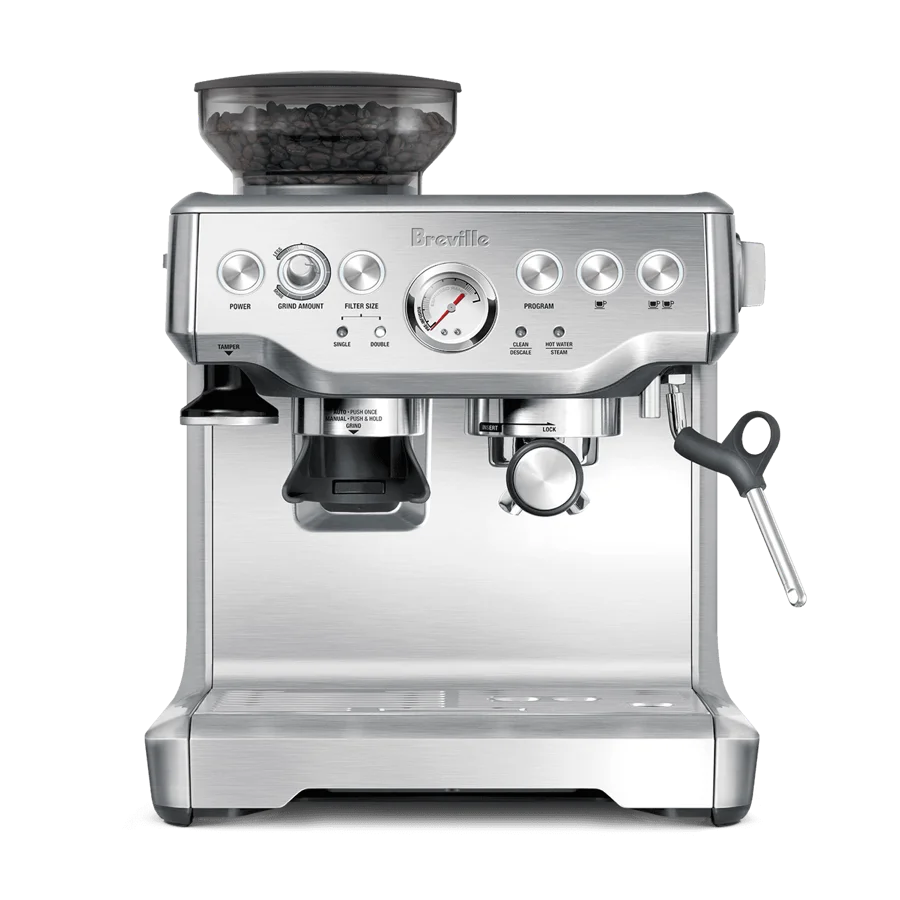
Breville Barista Express espresso machine in brushed stainless steel, seen from the front
Bought
2024
Status
Retired, replaced by the Bambino Plus.
What it is
Espresso machine with a built-in grinder, all in one box.

Before this machine I was not really into coffee, so it got less research than anything I bought after it. The reason I got it was simple: I liked milk-based espresso drinks, and I did not like how most chain coffee shops served burnt coffee. It still amazes me that they trained a whole population’s palate to expect that bitter, ashy taste.

From day one it was a big upgrade. The coffee tasted good, and the machine was easy to use and easy to learn. It has features that do not show up again until much further up the price ladder: a very fast heat-up time, and a PID, which to my mind is what makes an espresso machine usable at all. My friend Diaa has a Gaggia Classic, so I have seen life without one, and in his position I think I would have given up.

My dissatisfaction came months later, as my palate drifted towards lighter and lighter roasts. The built-in grinder is very weak, and past a certain roast level it simply cannot cope; even when it does grind, the quality is poor and nowhere near repeatable. It also lacks the prosumer features I wanted to play with, like pressure profiling and fine-grained temperature control.
No. 2 · The grinder

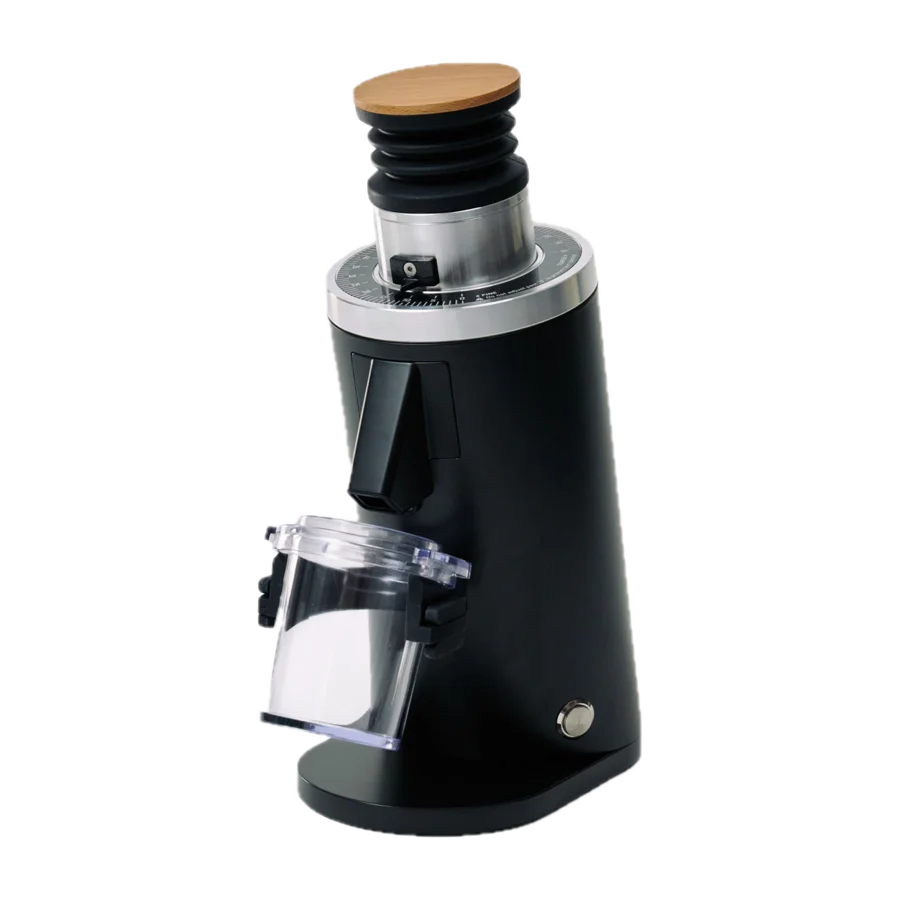
DF54

DF54 single-dose coffee grinder in black, with a wooden lid on the bellows and a clear grounds cup
Bought
2025
Status
In use, every day.
What it is
Single-dose grinder with 54 mm flat burrs.

When I bought it, this was the “value” grinder on the market. There are better options now, but it is still hard to fault at the price: a really strong AC motor and flat burrs for the money.

I have two real complaints. The first is retention: enough grounds stay inside that the grinder will clog if you go a short while without cleaning it. The second is burr alignment: there is a visible axial wobble on the burr attached to the motor, and I do not think that is something a DIY fix can reach. My friend Diaa has the same grinder and neither complaint applies to his, which makes me think the variance just comes with an unknown brand at a low price point.

No. 3 · The small one

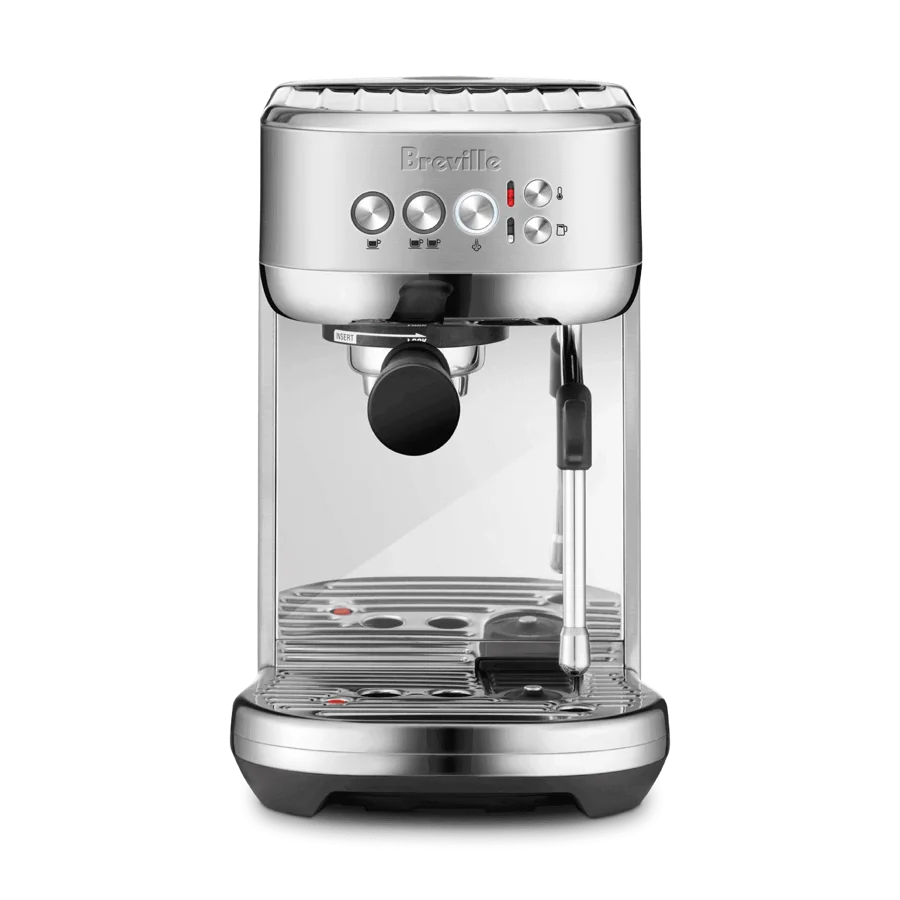
Breville Bambino Plus

Breville Bambino Plus espresso machine in brushed stainless steel, seen from the front
Bought
2026
Status
In use, paired with the DF54.
Why
Space. It takes up a fraction of the counter the Barista Express did.

This is essentially the Barista Express minus the grinder, plus some modernisation: a faster heating system and more steam power. It is also cheaper, which is why I think a Bambino Plus and a DF54 make a far better starting point than a Barista Express on its own.

I bought mine used, with the money from selling the Barista Express. I would recommend the used market for espresso machines generally, and for Breville in particular. Buying new the first time round was a mistake.

No. 4 · The lever machine

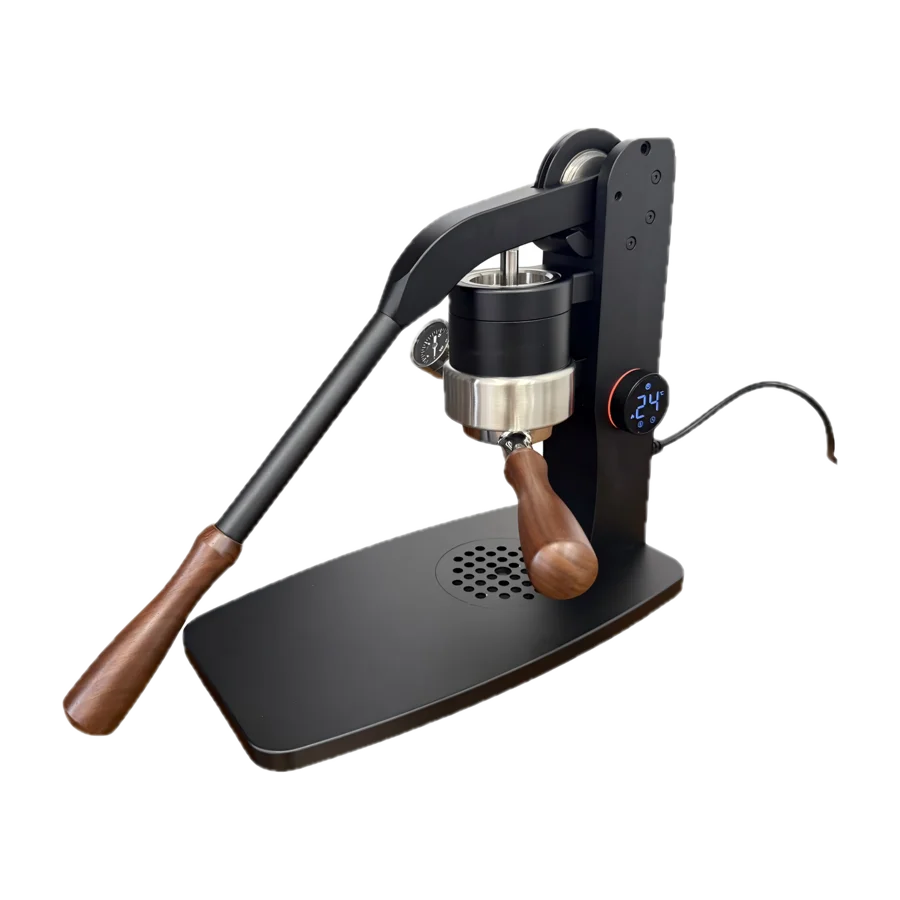
VK12 hand-press lever machine

VK12 manual lever espresso machine in black with walnut handles, a pressure gauge and a small temperature display
Ordered
2026, from Alibaba.
Status
In use.
What it is
Manual lever espresso machine with precise temperature control.

While I was swapping the Barista Express for the Bambino Plus, I was also eyeing manual lever machines. I was thoroughly sold on the idea that the real-time feedback you get pressing the lever down is as good as any pre-programmed pressure profile on a pump machine, potentially much better, and much cheaper to get to. I wanted a Cafelat Robot for a while, but it was always out of stock; failing that, the next best option was a Flair 58, which I found a little overpriced. Then I came across this thing on Alibaba.

It was one of the biggest bets I have made. A no-name brand, zero reviews when I ordered, nobody talking about it anywhere on the internet. But on paper it was superb: half the price of a Flair 58 and better in every respect. More than double the wattage in the heating element, precise temperature settings, and a planetary gear reduction to make the lever arm feel lighter.

I talked to the seller and actually managed to negotiate a good price: 400 USD for the machine, plus 100 USD for delivery and duties. Then I waited a little under two months for it to arrive.

I have had it a couple of months now and I love it. The build quality is very nice. Everything that matters is stainless steel, or at least metal. The group head reaches the set temperature in about five minutes when empty, and when I probed it with a digital thermometer the reading was close. It is easy enough to use, and I love almost every shot I pull with it. The real-time feedback is real: it is very hard to ruin a shot, because I can feel a grind that is off and correct for it mid-pull. More importantly, I can experiment with really expensive beans without the fear of spending most of the bag just dialling in.

It was not all smooth sailing at the start, though. The machine seemed not to hold enough water for a double shot, and the piston trapped a lot of air on every pull, which made the lever feel squishy. After some back and forth the seller offered to take it back, which was decent of them. Instead I did some tinkering and found the cause: an assembly error in the planetary gearbox that stopped the piston travelling as far down as it should. The machine is easy to take apart, and once I had fixed that it worked perfectly.